
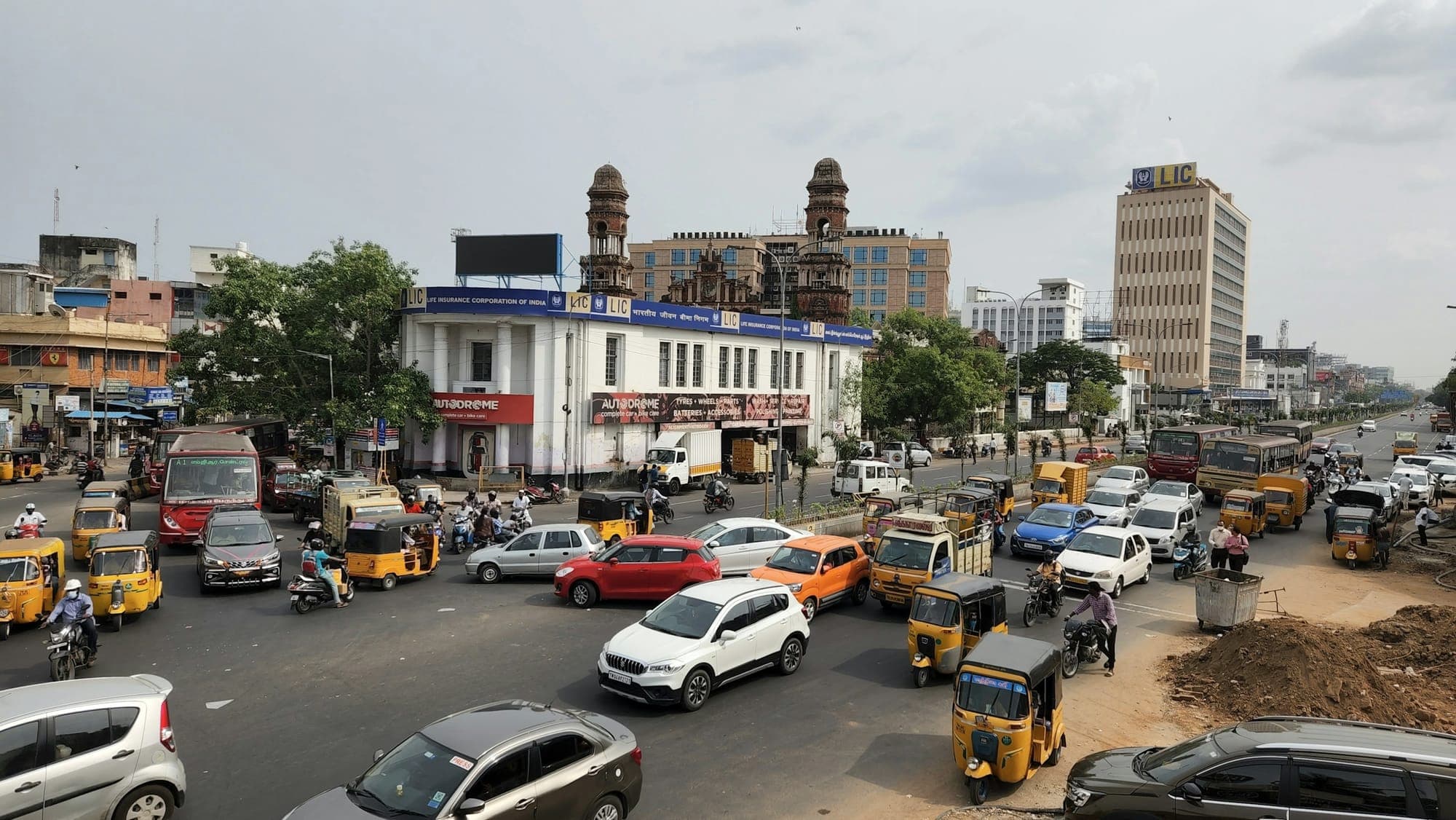
A motor accident claim seeks compensation for death, injury or property damage caused by the use of a motor vehicle. It is decided by the Motor Accident Claims Tribunal (MACT) under the Motor Vehicles Act, 1988, and the award is usually paid by the vehicle's insurer, because third-party insurance is compulsory (Section 146). An accident claim lawyer's work is to prove the accident, the vehicle's involvement and the loss, in figures the Tribunal will accept.
Who can file a MACT claim, and where
Under Section 166, a claim can be filed by the injured person, the owner of damaged property, or all or any of the legal representatives of a person who died, such as the spouse, children and parents. It can be filed before the Tribunal where the accident occurred, where the claimant lives or carries on business, or where the defendant lives. The police are required to send an accident report to the Tribunal, which can treat it as a claim, but families usually file their own petition with full particulars.
The Motor Accident Claims Tribunals for Raipur and Bilaspur sit at the district courts. A family living in Raipur can therefore claim there even if the accident happened elsewhere in India.
How motor accident compensation is worked out
In death cases, the main head is loss of dependency: the deceased's income, with an addition for future prospects, less a deduction for personal expenses, multiplied by a figure linked to age. The Supreme Court set out this structure in Sarla Verma v. Delhi Transport Corporation (2009) and refined it in National Insurance Co. v. Pranay Sethi (2017), which also fixed standard amounts for loss of estate, loss of consortium and funeral expenses.
In injury cases, the Tribunal awards medical expenses, loss of earnings during treatment, loss of future earning capacity where there is permanent disability, and compensation for pain and suffering and loss of amenities. Interest can be awarded from the date of the claim. These are the documents to collect:
- The FIR, accident report and charge-sheet, if filed
- Post-mortem report and death certificate, or hospital records and discharge summaries
- Medical bills, prescriptions and any disability certificate
- Proof of income: salary slips, income tax returns or business records
- Proof of age and relationship of the claimants
- Registration and insurance details of the vehicle involved
No-fault, hit-and-run and cashless treatment
Some compensation does not depend on proving negligence. Section 164 provides fixed compensation of ₹5 lakh for death and ₹2.5 lakh for grievous hurt without proof of fault. A full claim under Section 166 usually yields more where income and dependency can be proved, so the choice between the two needs advice before any payment is accepted.
Where the vehicle cannot be identified, compensation of ₹2 lakh for death and ₹50,000 for grievous hurt is payable under Section 161 and the hit-and-run scheme of 2022. The application is made to the authority designated under the scheme, not to the Tribunal.
Under a central scheme notified in May 2025 under Section 162, an accident victim is entitled to cashless treatment of up to ₹1.5 lakh for up to seven days from the accident at designated hospitals. A person who helps a victim in good faith is protected as a Good Samaritan under Section 134A.
Time limits, the criminal case and appeals
The police case, usually under Section 106(1) of the BNS (causing death by negligence) or Section 281 (rash driving), runs separately. The claim does not wait for the criminal trial, and the Tribunal decides negligence on the balance of probabilities, so an acquittal does not by itself defeat a claim. Our article on road accident laws explains the offences, and our criminal defence page covers the driver's position.
An award can be appealed to the High Court at Bilaspur within ninety days (Section 173), and an owner or insurer appealing must first deposit part of the award. Many claims are settled before Lok Adalats.
Families dealing with an accident claim can contact the firm at Raipur or Bilaspur to go through the papers.
What the practice handles
- Death and injury claims before Motor Accident Claims Tribunals
- Claims for damage to vehicles and property
- No-fault compensation under Section 164
- Hit-and-run compensation under the 2022 scheme
- Assessment of income, dependency and disability
- Licence and policy-breach questions that decide whether the insurer pays
- Settlement before Lok Adalats
- Appeals to the High Court under Section 173
- Execution of awards and release of compensation
Where these matters are heard
- Motor Accident Claims Tribunals at Raipur, Bilaspur and other districts
- Authorities designated under the hit-and-run scheme
- Lok Adalats
- Criminal courts, for the related prosecution
- High Court of Chhattisgarh, Bilaspur, for appeals
Questions about Motor Accident Claims
What is the time limit for filing a MACT claim?
Section 166(3) of the Motor Vehicles Act says a claim must be filed within six months of the accident. While hearing a challenge to that provision, the Supreme Court has directed tribunals and High Courts not to dismiss claims as time-barred on that ground. Until the question is finally decided, it is sensible to file within six months wherever possible.
How is compensation calculated in a death case?
The Tribunal takes the deceased's income, adds an amount for future prospects, deducts a share for personal expenses and multiplies the result by a figure linked to the deceased's age, following Sarla Verma (2009) and Pranay Sethi (2017). It then adds standard amounts for loss of estate, loss of consortium and funeral expenses. Proof of income is therefore the most important evidence in most claims.
What compensation is available in a hit-and-run case?
Where the vehicle cannot be traced, Section 161 of the Motor Vehicles Act and the 2022 hit-and-run scheme provide ₹2 lakh for death and ₹50,000 for grievous hurt. The application is made to the authority designated under the scheme rather than to the Tribunal, and should be made promptly with the FIR and the medical or death records.
Who pays the compensation in a motor accident claim?
The owner, the driver and the insurer of the vehicle are made parties, and where the vehicle holds valid third-party insurance, the insurer normally pays the award. If there was a breach of the policy, such as a driver without a valid licence, the Tribunal may direct the insurer to pay the claimant first and recover the amount from the owner.
Do I need to wait for the criminal case to end?
No. The claim before the Tribunal is independent of the prosecution of the driver. The Tribunal decides negligence on the balance of probabilities, using the FIR, the charge-sheet and other evidence, so a claim can succeed even if the criminal case is pending or ends in acquittal. The FIR and charge-sheet are still useful evidence and should be collected early.
Where can I file a MACT claim in Raipur or Bilaspur?
A claim can be filed before the Motor Accident Claims Tribunal where the accident occurred, where the claimant lives or carries on business, or where the defendant lives. The Tribunals for Raipur and Bilaspur sit at the district courts, so a family living in either city can usually claim there even if the accident happened in another district or State.
Is cashless treatment available after a road accident?
Yes. Under a central scheme notified in May 2025 under Section 162 of the Motor Vehicles Act, an accident victim can receive cashless treatment of up to ₹1.5 lakh for up to seven days from the date of the accident at designated hospitals. Keep the hospital records from this treatment, as they are also evidence in the claim.
A question that is not answered here? Send it to the firm.
This page describes the law in general terms as of 24 September 2026. It is not legal advice. The outcome of any matter depends on its facts, and the firm does not guarantee results.